
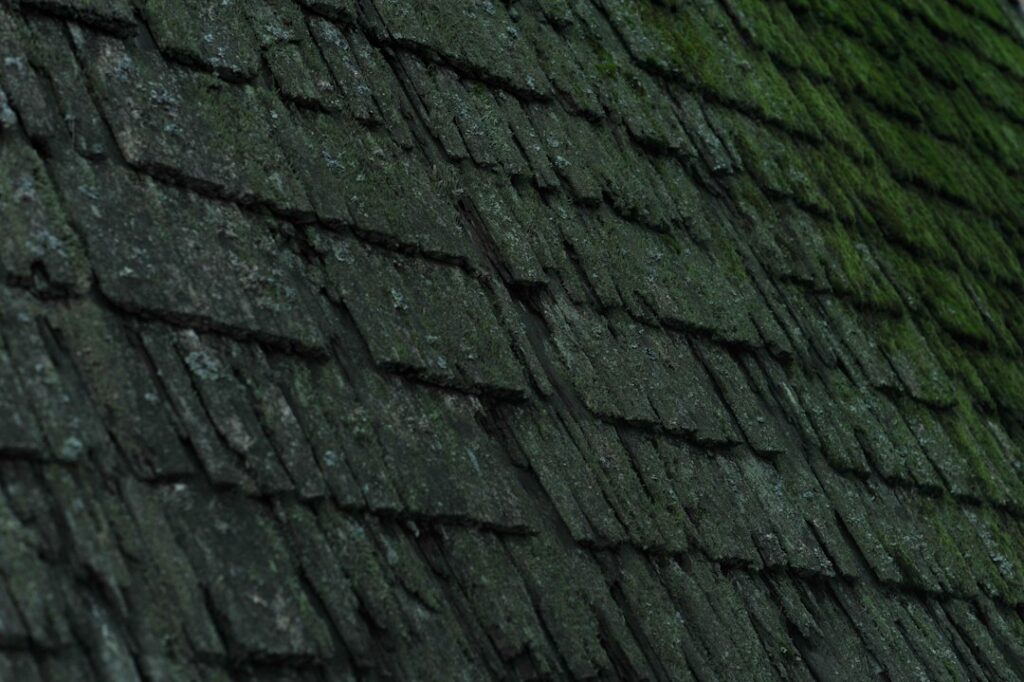
What causes moss and algae to grow on roofs?
Moss and algae usually develop where a roof remains damp for long periods and receives limited direct sunlight. Overhanging trees, shaded roof slopes, nearby water, clogged gutters, and poor ventilation can all increase the likelihood of growth.
In Skaneateles, seasonal moisture, snow, leaf litter, and shaded lots can create conditions that allow roof surfaces to stay wet well after rainfall or snowmelt. North-facing slopes and areas beneath large trees are often affected first.
Although moss and algae are related to moisture, they behave differently:
- Algae often appears as dark green, gray, or black streaks. It may spread across shingles without creating much texture.
- Moss forms a thicker, soft, green layer. It can lift or separate shingles as it grows underneath their edges.
- Lichen may appear as crusty, pale, or branching growth attached firmly to the shingle surface.
Dark roof streaks are not always dirt, and green growth is not always harmless moss. Identifying the growth correctly helps determine the safest cleaning method.
Does moss damage asphalt shingles?
Moss can damage asphalt shingles, especially when growth is thick or repeatedly returns. Moss holds moisture against the roof and may work its way beneath shingle edges. As the roof expands and contracts through changing temperatures, lifted edges can become more vulnerable to wind and water.
Possible signs of moss-related wear include:
- Raised, curled, or displaced shingles
- Granules collecting in gutters or at the base of downspouts
- Damp or stained roof sheathing in an attic
- Water marks on ceilings or upper walls
- Areas where moss has grown into seams or around flashing
Algae is generally less physically aggressive than moss, but heavy growth can keep shingles damp and make it harder to see developing damage. Both moss and algae can also make a roof look worn before its underlying structure is necessarily failing.
Should moss or algae be removed from the roof?
Removal is usually appropriate when growth is spreading, lifting shingles, blocking drainage, or returning in the same location. A small amount of algae may be mainly cosmetic, while established moss deserves closer attention because of its ability to retain moisture and disturb shingle edges.
A roof should not be treated as a walking surface simply because it appears dry. Asphalt shingles become slippery when damp, and moss-covered areas can be especially hazardous. Steep slopes, wet surfaces, loose shingles, and roofs near overhead electrical lines create additional risks.
From the ground, residents can often document the affected areas with photographs and inspect gutters, downspouts, attic spaces, and upper-floor ceilings without climbing onto the roof.
What is the safest way to clean roof growth?
The safest general approach is gentle treatment rather than forceful removal. Moss should not be scraped aggressively, pulled by hand, or blasted with a pressure washer. Those methods can remove protective granules, break shingle seals, and shorten the roof’s useful life.
For asphalt shingles, cleaning commonly involves:
1. Removing loose branches and leaf debris from accessible areas without stepping on the shingles.
2. Applying a roof-compatible moss or algae treatment according to the product label.
3. Allowing weather and time to loosen the growth.
4. Rinsing gently if the treatment instructions require it.
5. Inspecting for lifted, cracked, or missing shingles after the growth has cleared.
Chemical treatments must be selected carefully. Products containing chlorine bleach or other strong agents can damage plants, painted surfaces, metal components, and nearby waterways if they are not handled properly. Runoff should be controlled, and landscaping should be protected before any treatment is applied.
Because roofs vary by material and age, cleaning instructions for asphalt shingles may not apply to wood, slate, metal, or composite roofing. Some older or fragile roofing materials can be damaged by even moderate pressure or chemical exposure.
Can pressure washing remove moss from shingles?
Pressure washing is generally a poor choice for asphalt shingles. High-pressure water can loosen granules, force water beneath shingles, damage flashing, and disturb sealant strips. It may make the roof appear clean immediately while creating problems that are not visible from the ground.
Pressure washing also removes only the visible growth. If the roof remains shaded and damp, moss and algae may return. A long-term solution usually requires addressing moisture and shade rather than relying on repeated forceful cleaning.
How can future growth be reduced?

Controlling moisture and shade is more effective than repeatedly removing surface growth. Useful preventive steps include:
- Trim branches that heavily shade the roof while preserving tree health.
- Keep gutters and downspouts clear so rainwater and melting snow can drain properly.
- Confirm that downspouts discharge away from the foundation and roof edges.
- Remove accumulated leaves and twigs before they stay wet against the shingles.
- Check attic insulation and ventilation so warm, moist air does not condense beneath the roof.
- Keep roof valleys, flashing areas, and drainage paths free of debris.
- Watch for plumbing, bathroom, or kitchen exhaust vents that terminate improperly in the attic.
Tree trimming should be approached carefully. Cutting too much can stress trees or create new problems, while leaving branches close to the roof may continue to provide shade and drop debris. The goal is improved airflow and drying, not the removal of all nearby vegetation.
Do zinc or copper strips prevent moss and algae?
Metal strips installed near the upper portion of a roof can release small amounts of metal as rainwater flows over them. This may discourage some moss and algae growth on the areas below, but strips are not a complete solution.
They may be less effective on complex roofs, steep sections, or areas where rainwater does not flow evenly. Existing moss normally still needs to be addressed, and improperly installed metal can interfere with flashing or create corrosion concerns. Metal strips should not be attached by puncturing shingles or in a way that compromises waterproofing.
When is roof growth a safety or repair concern?
Roof growth deserves prompt attention when it is accompanied by visible shingle movement, leaks, sagging, damaged flashing, or water entering the attic. Safety concerns also increase on steep roofs, multi-story homes, wet surfaces, and structures surrounded by obstacles.
A qualified roofing inspector may be necessary when the roof cannot be viewed safely from the ground or when cleaning could disturb fragile materials. This is especially relevant for older homes, roofs with multiple layers, and surfaces where the extent of damage is hidden beneath moss.
Moss and algae do not automatically mean a roof needs replacement. The condition of the shingles, the age of the roof, the amount of granule loss, and the presence or absence of leaks matter more than appearance alone.
How often should a roof be checked?
A basic visual check twice a year—often in spring and fall—is useful for spotting debris, clogged drainage, moss, algae, and damaged shingles. Additional checks after major wind, heavy snowfall, or prolonged wet weather can reveal problems sooner.
From the ground, look for uneven shingle lines, dark streaks, green patches, exposed underlayment, and overflowing gutters. Inside the home, inspect attic insulation and roof sheathing for dampness, staining, mold-like odors, or daylight visible through the roof deck.
Addressing moisture early is usually simpler than waiting until growth has lifted shingles or allowed water into the structure. For households in Skaneateles, paying particular attention to shaded roof slopes, leaf accumulation, and spring snowmelt can help reduce recurring problems.
